
When told that non-Christians are accepted by God as long as they are good people, many respond:
“If a good person can make it to heaven just because he’s good, then Jesus died for nothing!”
That reaction doesn’t defend the Cross—it misunderstands it.
Jesus was crucified so that bad people would become good—and good people would become like Jesus.
In short, the Cross was meant to transform people.
Jesus died to save the world – by changing the world.
He didn’t die to be punished in our place, but to reveal God’s love, call us out of sin, and lead humanity into righteousness and Christlikeness.
That’s not “dying for nothing.” That’s fulfilling the very purpose for which God created the world.
That purpose can be seen here:
For those God foreknew, he also predestined to be conformed to the image of his Son, that he might be the firstborn among many brothers and sisters. (Romans 8:29)
And yet, for the past 500 years, much of Protestant Christianity has told a very different story.
According to Penal Substitution Atonement (PSA), God condemns all people for all sin and will punish them—unless they believe that Jesus was punished in their place. In this framework, forgiveness is not about becoming righteous, but about accepting a transaction.
In other words, the Cross becomes less about transformation and more about exemption.
We won’t attempt here to unravel every problem with that view—though there are many, and not small. Instead, we will set it aside and return to something earlier, simpler, and far more consistent with the message of Jesus himself.
We’re going back to the beginning—to the Gospel as it was first preached. To the life, death, and resurrection of Jesus Christ, and especially to why he died.
From the outset, the Cross was understood through what is now called Moral Influence Atonement (MIA). In this view, Jesus does not absorb punishment on our behalf; he confronts evil, reveals the character of God, and calls people out of darkness into a transformed life.
Two views. Same Cross. Completely different meanings.
One begins with the assumption that humanity is condemned simply for being human.
The other begins with the call to turn from evil and do what is right—and live.
Over time, the Gospel has been reframed. Jesus has been made the solution to a problem the Apostles never preached—a problem I call Universal Condemnation Because Human.
But in this article, we are setting those later ideas aside.
Instead, we will let the Scriptures speak—and ask a simple question:
Why did Jesus say he was going to die?
Because in the end, the clearest explanation doesn’t come from theologians.
It comes from Jesus himself.
Primary Scripture for Moral Influence Atonement (MIA):
This often-overlooked verse captures the essence of Moral Influence Atonement:
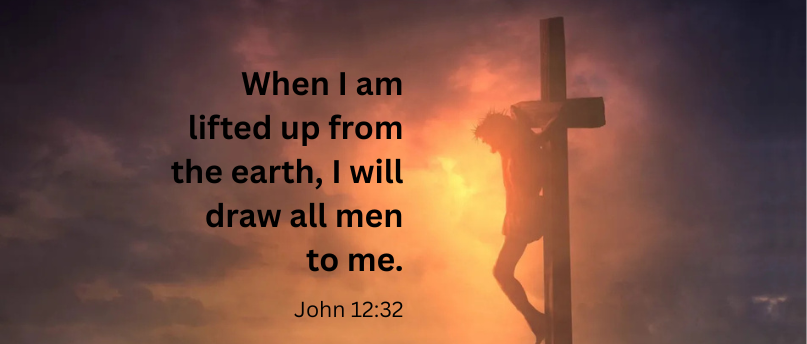
“If I am lifted up from the earth, I will DRAW all people to myself.” (John 12:32)
That drawing happens whenever someone hears about the crucifixion of Christ, especially when it impacts his life and he dedicates his life to following Jesus.
Moral Influence Atonement: The Church’s Message Before Penal Substitution Atonement (PSA)
Before reviewing the many Scriptures that explain why Jesus died, we can summarize the biblical reasons as follows:
Moral Influence: Jesus Died to Reveal God’s Love and Draw People to Him
- The Cross is a powerful, influential demonstration of God’s love.
- That love was revealed to draw people.
Moral Influence: Jesus Died to Influence Moral Transformation
- To influence real change in behavior as a response to God’s love
- To produce actual righteousness, not merely a legal declaration
- To lead people to repent of wickedness—not just rethink it, but abandon it
- To bring forgiveness, by the grace of God, to those who turn from their evil ways
Moral Influence – Jesus Died to Give us Victory Over:
- Sin and bondage to unrighteousness
- The devil – his works and accusations
- This present evil age
- The power of darkness
- The fear of death
Moral Influence – The Gospel Message – Jesus Died to Save by Turning People From Evil
- Jesus did not come to save those who do not need saving.
- He came to turn sinners from their wickedness—and in doing so, to save them.
- This is how the Scriptures describe the Gospel.
- Jesus has been God’s most effective means of bringing about this transformation.
Moral Influence – Jesus Also Died to:
- Provide an example of “dying to self,” which Jesus made essential to discipleship
- Purify and cleanse us from sin
- Transform both character and conduct, making us more like Jesus
Moral Influence: God Also Provided the Holy Spirit to Influence and Empower Transformation.
- The Cross was never meant to stand alone.
- The Holy Spirit was also given to influence behavior.
- The Spirit empowers lasting change in character and action.
The claims above are not theological speculation—they arise directly from Scripture. When the relevant passages are read together, a consistent picture emerges of the Cross as God’s means of drawing, transforming, and restoring people.
Here are those same points again—this time with the Scriptures that support them:
Moral Influence – Jesus Died to Reveal His and God’s Love to Draw People to Him
John 3:16 For this is how God loved the world: He gave his uniquely begotten Son so that everyone faithful to him would not be lost but have eternal life.
John 10:14-18 I am the good shepherd, and I know my own, and my own know me, even as the Father knows me and I know the Father; and I lay down my life for the sheep. I have other sheep, which are not of this fold; I must bring them also, and they will hear my voice; and they will become one flock with one shepherd.
John 12:32 “If I am lifted up from the earth, I will DRAW all people to myself.”
John 15:13 Greater love has no one than this: to lay down one’s life for one’s friends.
Mark 2:17 “It is not the healthy who need a doctor, but the sick. I have not come to call the righteous, but sinners.” (See also Matthew 9:13 and Luke 5:32)
Matthew 20:28 The Son of Man did not come to be served, but to serve, and to give his life as a price paid for many.
Romans 5:6-11 You see, at just the right time, when we were still powerless, Christ died for the ungodly. Very rarely will anyone die for a righteous person, though for a good person, someone might possibly dare to die. But God demonstrates his own love for us in this: While we were still sinners, Christ died for us. Since we have now been made righteous [experientially] by [because of the influence of] his blood, how much more shall we be saved from God’s wrath through him! For if, while we were God’s enemies, we were reconciled to him through the death of his Son, how much more, having been reconciled, shall we be saved through his life!
2 Corinthians 5:14-15 For Christ’s love compels us, because we are convinced that one died for all, and therefore all died. And he died for all, that those who live should no longer live for themselves but for him who died for them and was raised again.
1 Peter 3:18 For the Messiah also suffered for sins once for all, an innocent person for the guilty, so that he could bring you to God.
1 John 4:9-11 This is how God’s love was revealed among us: God sent his uniquely begotten Son into the world so that we might live through him. This is love: not that we have loved God, but that he loved us and sent his Son to be the atoning sacrifice for our sins. Dear friends, since God so loved us, we also ought to love one another.
Can you see influence in these statements, particularly in the words “draw”, “call,” and “bring”? The following section will explain that Jesus died to influence people towards righteousness.
Love is the strongest force in the universe. It is a force for good. We can even “overcome evil with good,” according to Romans 12:21. How much more will the love of God and Christ have on us?
Moral Influence: Jesus Died to Bring About Moral Transformation
Matthew 16:24 AMPC Then Jesus said to His disciples, “If anyone desires to be My disciple, let him deny himself [disregard, lose sight of, and forget himself and his own interests] and take up his cross and follow me.”
In the public crucifixions they had seen, the one being crucified was humiliated and certainly not getting what he wanted. Even before Jesus struggled in the Garden of Gethsemane to submit to God’s will, he was all about us not getting what we want so that God gets what he wants.
2 Corinthians 5:14–15 “For Christ’s love compels us, because we are convinced that one died for all… so that those who live should no longer live for themselves but for him…”
The Cross compels – it exerts moral force and behavior – to put away selfishness that is the cause of much evil in the world. Living for Jesus means being a disciple.
Titus 2:11–14 For the grace of God has appeared that offers salvation to all. It teaches us to say “No” to ungodliness… and to live self-controlled, upright and godly lives.
Grace (revealed in Christ) is instructional – it teaches us, and so influences our behavior.
1 Peter 2:21–24 Christ suffered for you, leaving you an example, so that you should follow in his steps… He himself bore our sins in his body on the tree, so that we might die to sins and live for righteousness.
For what purpose and outcome did he die? “…so that we might die to sins and live for righteousness.”
“Bore our sins in his body” isn’t about a transfer of our sins to him via PSA; it’s about him taking on the burden of our sins so he would do God’s will by going to the Cross.
Hebrews 12:1–3 Let us throw off everything that hinders and the sin that so easily entangles. And let us run with perseverance the race marked out for us, fixing our eyes on Jesus, the pioneer and perfecter of faith. For the joy set before him, he endured the cross, scorning its shame, and sat down at the right hand of the throne of God. Consider him who endured such opposition from sinners, so that you will not grow weary and lose heart.
The Cross is meant to be contemplated so that Jesus’ example inspires faithfulness.
In this sense, Jesus died for EVERYONE, because everyone needs to have less sin and be more like Jesus.
1 John 3:5–7 – No one who lives in him keeps on sinning… the one who does what is right is righteous.
Moral Influence: The Gospel Message – Jesus Died to Save by Turning People from Evil
Genesis 22:18 “Through [Abraham’s] offspring, all nations on earth will be blessed, because you have obeyed me.”
Galatians 3:8–9 And the scripture, foreseeing that God would justify [make righteous] the Gentiles by faithfulness, preached the Gospel beforehand unto Abraham, saying, “In you shall all the nations be blessed.” So then they that are faithful are blessed with faithful Abraham.
Paul tells us of the first mention of the Gospel in the Scriptures. Because of the hermeneutical Principle of First Mention, this is important. This verse sets the stage for all “Gospel” scriptures to follow. Here are scriptures showing the Apostles fulfilling that prophecy to Abraham by preaching about Jesus turning people from their unrighteousness:
Luke 24:45-47 Then he opened their minds so they could understand the Scriptures. He told them, “This is what is written: ‘The Messiah will suffer and rise from the dead on the third day, and repentance for the forgiveness of sins will be preached in his name to all nations, beginning at Jerusalem.’”
Acts 3:17-20 “And now, brothers, I know that you acted in ignorance, as did your leaders. But in this way God has fulfilled what He foretold through all the prophets, saying that His Christ would suffer. Repent, then, and turn back, so that your sins may be wiped away, that times of refreshing may come from the presence of the Lord.”
Acts 3:26 “God… sent him to bless you by turning each of you from your wicked ways.”
Acts 26:20 “First to those in Damascus, then to those in Jerusalem and in all Judea, and then to the Gentiles, I [Paul] preached that they should repent and turn to God and demonstrate their repentance by their deeds.“
See also Matthew 26:26-28
Jesus Died on the Cross so We will Have Victory Over the Following:
Sin and Bondage to Sin, Unrighteousness, the Devil – His Works and Accusations, The Present Evil Age, The Power of Darkness, and Fear of Death.
John 8:34 Jesus replied, “Very truly I tell you, everyone who sins is a slave to sin.”
Galatians 1:4 Jesus gave himself for our sinfulness to set us free from the present evil age, according to the will of our God and Father.
Galatians 2:20 I no longer live, but the Messiah lives in me, and the life that I am now living in this body I live by the faithfulness of the Son of God, who loved me and gave himself for me.
Colossians 1:13-14 God has rescued us from the power of darkness and has brought us into the Kingdom of the Son, whom he loves, through whom we have redemption, the forgiveness of sins.
Colossians 2:15 And when he had disarmed the rulers and the authorities, he made a public spectacle of them, triumphing over them in the Cross.
1 Peter 2:21-24 Christ suffered for you, leaving you an example, that you should follow in his steps… He himself bore our sins in his body on the cross, so that we might die to sins and live for righteousness. By his wounds you have been healed.
Hebrews 2:14-15 Therefore, since the children have flesh and blood, he himself also shared the same things, so that by his death he might destroy the one who has the power of death (that is, the Devil) and might free those who were slaves all their lives because they were terrified by death.
1 John 3:8 The person who practices sin belongs to the evil one, because the Devil has been sinning from the beginning. The reason that the Son of God was revealed was to destroy what the Devil has been doing.
Revelation 1:5-6 Jesus freed us from our sinfulness by his blood, and made us to be a kingdom, priests serving his God and Father.
Revelation 12:10-11 Now the salvation, the power, the kingdom of our God, and the authority of his Messiah have come. For the one who accuses our brothers, who accuses them day and night in the presence of our God, has been thrown out. Our brothers conquered him by the blood of the lamb and by the word of their testimony.
See also: Ephesians 3:16-19, Titus 3:4-5, Hebrews 10:18
These scriptures show that a victorious Christian life isn’t just a nice side benefit to salvation, but is why Jesus died for us. “By his blood” is code for the effect his crucifixion has had on us.
Moral Influence – Jesus Died for Other Reasons Also:
To Be a Selfless Example of “Dying to Self”
Luke 9:23 And he said to all: “If any man will come after me, let him deny himself, and take up his cross daily, and follow me.“
Romans 6:3-4, 8 Don’t you know that all of us who were baptized into Christ Jesus were baptized into his death? We were therefore buried with him through baptism into death so that, just as Christ was raised from the dead through the glory of the Father, we too may live a new life. Now if we died with Christ, we believe that we will also live with him.
NOTE – Romans 6:3-8 isn’t necessarily about water baptism because he’s talking about immersion into Christ and his death. That is done by dying to self, not by immersion in water. But even if Paul is alluding to water baptism, his stress is on what the symbol represents, that is, the reality of what the symbol points to, not just the symbol itself. If a new convert is baptized in water but never gives up his old selfish ways centered on self, he hasn’t been “immersed into Christ”. He has only gotten a bath.
Galatians 2:19-20 For through the law I died to the law so that I might live for God. I have been crucified with Christ and I no longer live, but Christ lives in me. The life I now live in the body, I live by faithfulness to the Son of God, who loved me and gave himself for me.
Philippians 3:10-11 I want to know Christ—yes, to know the power of his resurrection and participation in his sufferings, becoming like him in his death, and so, somehow, attaining to the resurrection from the dead.
To Purify Us from Our Sin to Make Us Better People
Titus 2:14 Jesus gave himself for us that he might redeem us from all iniquity and purify for himself a people of his own who are zealous of good deeds.
Bad people want to do bad things. Good people want to do good things. Jesus gave himself to buy us away from doing bad things (iniquity), and into doing good.
Hebrews 9:12-14 If the blood of goats and bulls and the ashes of a heifer sprinkled on those who are ceremonially unclean sanctify them so that they are outwardly clean, how much more will the blood of the Messiah, who through the eternal Spirit offered himself unblemished to God, cleanse our consciences from dead actions [actions that cause spiritual death] so that we may serve the living God!
He cleanses our consciences from dead actions by purifying us so that we don’t do those actions that cause death.
Hebrews 9:26-28 But now, at the end of the ages, he has appeared once for all to remove sin by his sacrifice. Indeed, just as people are destined to die once and after that to be judged, so the Messiah was sacrificed once to take away the sins of many people.
This isn’t forgiveness of sins; this is removal of sins, by changing our nature so that we no longer want to and do those sins.
Hebrews 10:16-18 This is the covenant that I will make with them after those days, says the Lord. I will put my laws into their hearts, and in their minds will I write them, and their sins and iniquities will I remember no more.
This speaks of a changed character so that those who did iniquities no longer do them. If we keep doing them, we will keep reminding God. He would much rather forgive and forget!
1 John 1:7-9 But if we live in the light—just as he is in the light—then we have fellowship with one another, and the blood of Jesus, his Son, purifies us from every sin. If we say that we have no sin, we deceive ourselves, and there is no truth in us. But if we confess our sins to God, he will keep his promise and do what is right: he will forgive us our sins and purify us from all our wrongdoing.
Revelation 7:14 Then he told me, “These are the people who are coming out of the terrible suffering. They have washed their robes and made them white in the blood of the lamb.”
Revelation 19:8 Fine linen, bright and clean, was given her to wear. Fine linen stands for the righteous acts of God’s holy people.
“Washed their robes and made them white” in Revelation 7:14 is further explained in 19:8, where a clean, white robe (fine linen) represents good people doing good things. They have “washed it in the blood” in the sense that it is because of the crucifixion of Christ that they have purified themselves to walk in righteousness. They have been morally influenced to change their ways because of the Cross.
God Also Provided the Holy Spirit to Influence Behavior and Give Power for Change
The Cross was never intended to stand alone to influence humanity towards love, righteousness, and salvation. God had promised through his prophets long ago that he would also send his Holy Spirit as part of the New Covenant, to replace the Old Covenant, which was based on the Law of Moses. See Acts 15 and Galatians for more on that.
Isaiah 31:31-33 “Behold, the days are coming, declares the Lord, when I will make a new covenant with the house of Israel and the house of Judah, not like the covenant that I made with their fathers on the day when I took them by the hand to bring them out of the land of Egypt, my covenant that they broke, though I was their husband, declares the Lord. For this is the covenant that I will make with the house of Israel after those days, declares the Lord: I will put my law within them, and I will write it on their hearts. And I will be their God, and they shall be my people.”
Ezekiel 36:26–27 “I will give you a new heart… and I will put my Spirit within you, and cause you to walk in my statutes…”
Hebrews 10:15–16 “The Holy Spirit also testifies to us about this… ‘I will put my laws in their hearts…’”
The Holy Spirit causes changed behavior. Any change of status we have, such as being a Born-Again Christian, or having righteousness imputed to us, is because of that change of behavior.
John 14:26 “The Advocate, the Holy Spirit… will teach you all things and remind you of everything I have said to you.”
John 16:8 “When he comes, he will convict the world concerning sin and righteousness and judgment.”
The Holy Spirit’s role is for conviction, or moral persuasion.
Galatians 5:16–23 “Walk by the Spirit, and you will not gratify the desires of the flesh… The fruit of the Spirit is love, joy, peace…”
2 Thessalonians 2:13 “God chose you… through sanctification by the Spirit and belief (faithfulness) in the truth (true living).”
1 Corinthians 2:12–13 We have received… the Spirit who is from God, that we may understand what God has freely given us.
Romans 8:13–14 If by the Spirit you put to death the deeds of the body, you will live. For those who are led by the Spirit of God are the children of God.
Being led by the Spirit means dying to self, or not being selfish. The Law of Moses failed to accomplish this on a consistent national level.
In the end, the Cross is not a transaction to be believed—it is a lifestyle to be embraced.
Jesus did not die to change God’s posture toward us, but to change us—to draw us, to confront us, to transform us, and to lead us into real, not legal, righteousness. The consistent witness of Scripture is not that we are legally declared righteous while remaining the same, but that through the influence of the Cross and the power of the Spirit, we actually become different people. This is the Gospel as Jesus and His Apostles proclaimed it: turn from evil, do what is right, and God will bless you. Anything less reduces the Cross to a concept instead of the life-changing power it was always meant to be.


0 Comments